
Our Office
Visit Us Online
-


Losing one or more teeth changes more than just the way you look — it affects chewing, speech, and even how your jaw ages. Adults lose teeth for many reasons, including decay, gum disease, and trauma, and each case has its own demands. Dental implants are a dependable way to replace missing teeth by restoring both function and the structure that supports the face. When planned and placed correctly, implants can feel and perform very much like natural teeth.
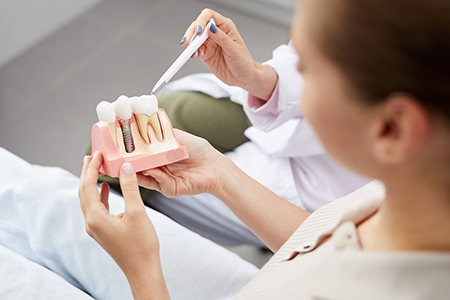
Compared with removable dentures or conventional bridges, implants anchor replacement teeth directly to the jaw. This root-level support reduces movement while you talk and eat, preserves the bone beneath missing teeth, and helps maintain the shape of your face. For many people, the practical advantages — improved bite force, stable speech, and the ability to enjoy a wider variety of foods — make implants the most satisfying long-term solution.
At the same time, implants offer flexibility. They can support a single crown, multiple crowns, a bridge, or an entire arch of teeth depending on your needs. That versatility, combined with strong long-term outcomes when maintained properly, is why implants are a core option for rebuilding a functional, attractive smile. If you want conservative, predictable tooth replacement, dental implants deserve serious consideration.
A dental implant is a precision-made post, typically made from a biocompatible material like titanium, that is placed into the jawbone where a tooth is missing. Over a period of healing called osseointegration, the bone grows around the implant and creates a stable foundation. Once integration is complete, an abutment and prosthetic tooth are attached to the implant to restore appearance and function. The result is a restoration that behaves very much like a natural tooth root and crown working together.
Because the implant becomes part of the jaw, it delivers the mechanical stimulation the bone needs to remain healthy. Without that stimulation, bone volume can shrink over time, which may change facial contours and complicate future treatment. Implants help prevent that bone loss, which supports both oral health and the long-term appearance of your smile.
Implant treatment is not one-size-fits-all. Your oral health, the number and location of missing teeth, and your personal goals determine the best approach. With modern planning tools and restorative materials, clinicians can design solutions that prioritize comfort, durability, and aesthetics. A careful evaluation helps define whether you need a single implant, an implant-supported bridge, or a full-arch restoration to meet your expectations.
We approach planning with an eye toward balance: preserving healthy teeth whenever possible, optimizing jaw support, and creating a result that integrates naturally with your smile. The choice of implant-supported restoration has implications for maintenance and long-term outcomes, so understanding the differences up front helps set realistic expectations for treatment and care.
Successful implant care starts with a thorough evaluation. That often includes a clinical exam, digital x-rays, and sometimes 3-D imaging to assess bone volume and key anatomical structures. During planning, your clinician will discuss the proposed approach, what to expect during surgery, and the stages of prosthetic work that follow. Clear communication helps minimize surprises and supports a smooth treatment path.
Placement of an implant is usually performed as an outpatient procedure under local anesthesia, and sedation options are available for patients who prefer extra comfort. The surgical time depends on how many implants are placed and whether additional procedures like extractions or bone grafting are needed. After placement, a period of healing allows the implant to integrate with the bone; temporary restorations can often be provided while you heal.
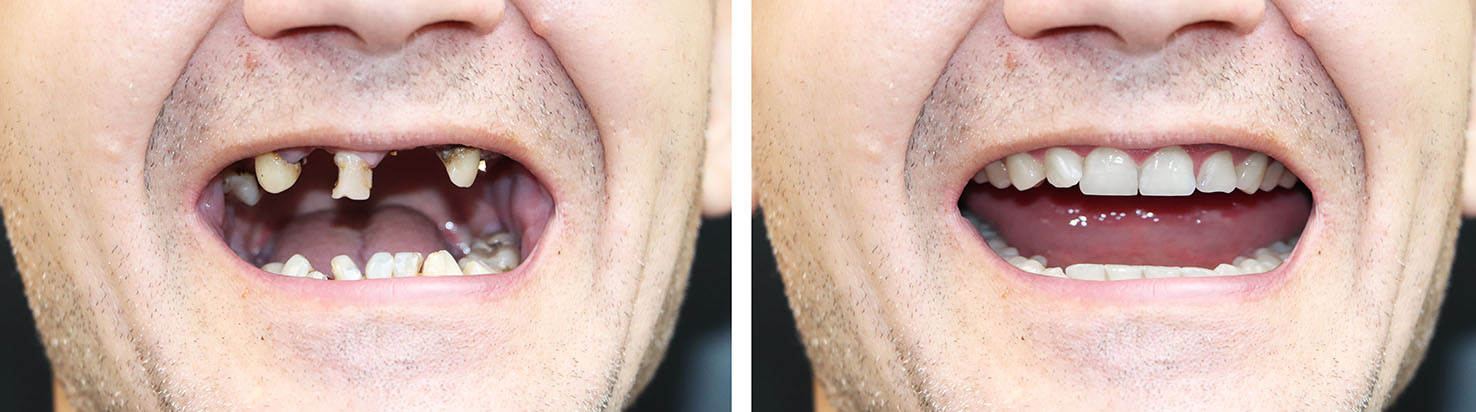
Some patients need preparatory work to ensure a stable implant foundation. Tooth removal, ridge preservation, or bone grafting can rebuild the volume and shape of the jaw, creating the right environment for long-term implant success. Grafting materials and techniques vary, but the goal is consistent: providing sufficient, healthy bone to secure the implant and support the final restoration.
These adjunctive procedures are common and predictable when planned correctly. Your clinician will explain the reasons for any recommended grafting or sinus-lift procedures, outline the expected healing timeline, and describe how these steps contribute to a durable, natural-feeling outcome.
Dental implants can last many years with proper care. Daily brushing, flossing around the implant, and regular dental cleanings are the foundation of long-term success. Your dental team will show you the best techniques and tools for cleaning around implant restorations so you can maintain healthy gums and bone. Routine checkups help detect early changes and keep restorative components functioning well.
Although implants are highly durable, they still require attention. Gum inflammation or unusual looseness around an implant should be evaluated promptly. Early intervention for soft-tissue concerns or prosthetic wear is often simple and can prevent more involved treatment later on. Consistent professional follow-up protects both the implant and the health of surrounding teeth and tissues.
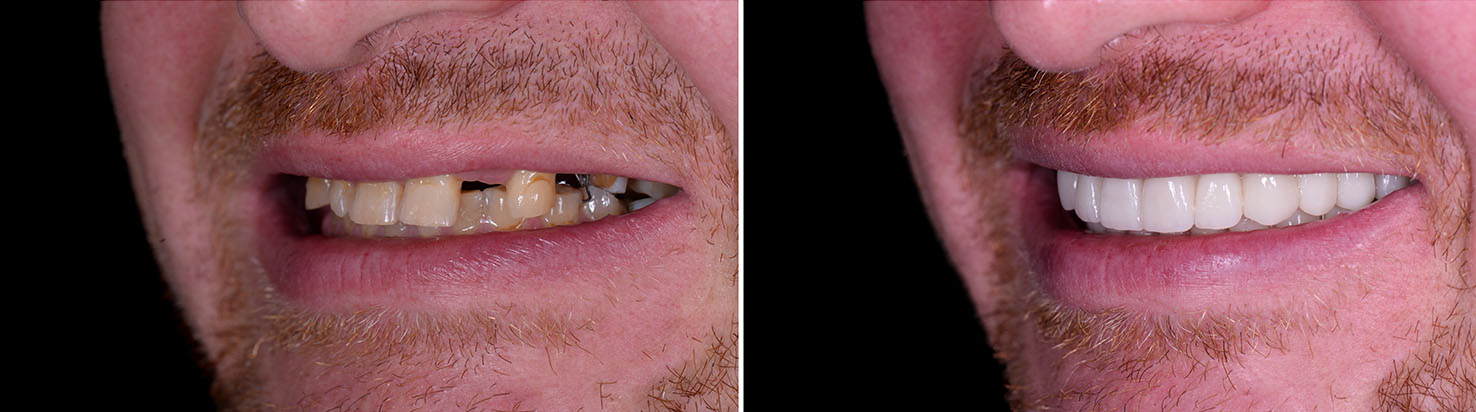
Replacing missing teeth with implants is a thoughtful process that combines precise planning, surgical skill, and detailed restorative work. When performed with attention to individual needs, implant dentistry can restore comfort, function, and confidence for years to come. If you’re exploring tooth replacement options, a consultation will clarify which implant pathway makes the most sense for your mouth and lifestyle.
Morrison Dental Care offers careful evaluation and personalized treatment planning to help patients choose the right implant solution. Contact us to learn more about how implant dentistry could rebuild your smile and improve your oral health.

If you've lost a tooth due to injury, decay, gum disease, or any other reason, we recommend dental implants to replace missing teeth. Dental implants come the closest to replicating the look, feel, and function of your natural teeth.
Dental implants are placed into the jawbone and mirror the same function as the root of a tooth. The procedure for dental implants is usually performed while a patient is sedated. Patients who undergo IV sedation must have an empty stomach and transportation home following the procedure. Most sedation patients will have little to no memory of the procedure occurring.
Generally, dental implants are made out of a biocompatible metal such as titanium. Biocompatible metals are also used for other common bone implants (such as shoulder, hip, and knee replacements). The visible portion of the implant is usually made out of porcelain and is custom-made to match your existing teeth.
Dental implants are designed to fuse to the bone, which makes them become permanent fixtures. Typically speaking, the success rate is nearly 100%. There are few cases in which the implant will not fuse as intended and must be removed. If this happens to occur, the procedure can be attempted again a few months later.
Dental implants are not usually covered by dental insurance, but may be covered under a patient's medical insurance. Our office and your insurance company can discuss coverage options with you based on your individual case and treatment plan.
It's easy... just take care of an implant as if it's a natural tooth! This involves regular brushing, flossing, and dental checkups. If you have any concerns about your implant, contact us immediately.
Dental implants are small, biocompatible posts surgically placed into the jawbone to replace missing tooth roots and provide stable support for prosthetic teeth. Once an implant integrates with the surrounding bone through osseointegration, it serves as a foundation for an abutment and a final restoration such as a crown, bridge, or denture. The implant system mimics the function of a natural tooth root to restore chewing ability and support surrounding facial structures.
This root-like support helps preserve jawbone volume and maintain natural facial contours by transmitting chewing forces to the bone. Implants restore function and speech with stability that removable options often cannot match. The office of Morrison Dental Care uses modern planning and imaging to design predictable implant treatments tailored to each patient.
Good candidates typically have healthy gum tissue and sufficient jawbone to support an implant, though many bone deficiencies can be corrected with grafting. Medical conditions such as uncontrolled diabetes or heavy tobacco use can affect healing and are reviewed during evaluation to determine individualized suitability. Age alone is not a limiting factor; overall health and oral conditions are the primary considerations.
The dental team will perform a comprehensive exam with digital X-rays or CBCT imaging to assess anatomy and identify any issues that need treatment prior to implant placement. Treatment recommendations consider medical history, current oral health, functional needs, and esthetic goals. A personalized plan ensures the safest and most predictable path to implant therapy.
The implant process begins with a consultation and diagnostic imaging to plan precise implant placement based on each patient’s anatomy. If needed, preparatory procedures such as extractions or bone grafting are completed first to establish a healthy foundation for implants. The implant is surgically placed under local anesthesia with sedation options discussed beforehand, and the surgical site is allowed to heal.
During healing, the implant integrates with the bone, a process that typically takes several months before final restorations are attached. An abutment is placed and impressions are taken to fabricate the final crown, bridge, or denture that restores function and esthetics. Throughout treatment, the team provides preoperative and postoperative instructions and schedules follow-ups to monitor progress.
Bone grafting is recommended when there is insufficient jawbone volume or density to support an implant reliably, which can result from tooth loss, periodontal disease, or long-term denture wear. Grafting rebuilds the ridge and creates the necessary support to achieve stable implant placement and predictable long-term outcomes. Materials for grafting may include the patient’s own bone, donor bone, or biocompatible synthetic materials, depending on the clinical needs.
In some cases grafting can be performed at the time of extraction or implant placement, while other situations require a separate healing period before implants are placed. The clinician will explain the recommended technique, expected healing timeline, and how grafting supports implant success. Careful surgical technique and good postoperative care contribute to successful bone regeneration.
Implant restorations range from single-tooth crowns to implant-supported bridges, implant-retained dentures, and fixed full-arch solutions using multiple implants. A single-tooth implant restores one missing tooth without altering adjacent teeth, preserving healthy tooth structure and providing fully independent support. Implant-supported bridges use strategically placed implants to replace several adjacent teeth while maintaining bone stimulation and avoiding preparation of natural teeth.
Full-arch restorations employ multiple implants to support a fixed prosthesis that closely mimics natural dentition, while implant-retained dentures attach to implants for improved retention and comfort and can be removable for cleaning. Treatment selection depends on anatomy, functional needs, esthetic goals, and patient preferences. Your dentist will recommend the restoration type that best balances durability, function, and maintenance for your situation.
Initial recovery after implant surgery commonly involves mild swelling, bruising, and low-level discomfort for a few days, which can be managed with cold packs and recommended medications. Soft foods and avoiding strenuous activity for the first 48 to 72 hours support comfort and healing, and any sutures are typically removed or resorb within one to two weeks. The surgical site will be checked at follow-up appointments to confirm appropriate soft tissue healing.
Complete osseointegration, during which the implant fuses with the jawbone, usually takes several months before the final restoration is placed. Some treatment protocols permit temporary teeth immediately after placement, while others require waiting for full healing. Your dental team will provide a case-specific timeline and monitor healing to determine when to proceed to the final prosthesis.
Dental implants preserve jawbone by transmitting functional forces to the bone, which helps prevent the resorption that often follows tooth loss and removable dentures. Because implants are anchored into bone, they provide improved stability for chewing and speaking compared with removable prostheses and reduce the risk of embarrassing movement. Implants also often eliminate the need to alter adjacent healthy teeth, a step commonly required for traditional fixed bridges.
Implant-supported restorations expand dietary options and can improve the predictability of speech and function relative to ill-fitting dentures. By helping preserve soft tissue and bone contours, implants contribute to maintained facial support and predictable esthetic outcomes. Treatment planning evaluates functional needs and oral health factors to determine the most appropriate restorative approach for each patient.
Long-term implant care emphasizes effective daily oral hygiene and regular professional maintenance, much like natural teeth. Brushing twice daily with a soft-bristled toothbrush, flossing or using interdental cleaners around implants, and following any supplemental home-care recommendations help prevent plaque buildup and peri-implant inflammation. Routine dental exams and professional cleanings enable the team to monitor gum health and detect early signs of complications.
Specialized instruments and techniques are used during professional cleanings to protect implant surfaces while removing deposits. The practice will schedule periodic radiographs or clinical assessments to confirm implant stability and surrounding bone health. Prompt attention to changes in comfort, tissue appearance, or mobility improves the chances of preserving long-term function.
Dental implant placement carries risks similar to other minor surgeries, including infection, nerve irritation, sinus involvement in the upper jaw, or failure to integrate with bone. Careful diagnostic imaging, meticulous surgical technique, and adherence to postoperative instructions reduce these risks substantially. Patient factors such as smoking, uncontrolled medical conditions, and poor oral hygiene can increase complication rates and are addressed during treatment planning.
Clinical studies report high long-term success rates for implants when cases are properly planned and maintained, and many patients experience durable function for many years. Success depends on implant placement quality, bone health, patient habits, and regular professional care. Your dentist will review risk factors specific to your situation and outline measures to optimize outcomes.
During a consultation the clinician reviews your medical and dental history and conducts a thorough oral exam to evaluate gum health and bone volume. Diagnostic imaging such as digital X-rays or a CBCT scan is often obtained to map bone anatomy and identify the optimal implant positions. The team will discuss restorative goals, anesthesia or sedation options, and any preparatory procedures that may be needed to achieve predictable results.
After evaluation, the clinician explains recommended treatment options, the expected sequence of care, and the typical healing timelines for your case. You will receive preoperative and postoperative instructions and have the opportunity to ask questions about maintenance and follow-up. Patients in the Clifton Park area meet with the office team at Morrison Dental Care to receive personalized guidance and next steps for implant therapy.
Address:
1524 Route 9, Clifton Park, NY 12065