
Our Office
Visit Us Online
-


Thanks to improvements in dental materials, digital workflows, and clinical techniques, replacing missing teeth is more reliable and natural-looking than ever. While fixed solutions such as dental implants and bridgework can be excellent choices in many cases, removable dentures continue to be a dependable option for restoring a complete, functional smile.
At the office of Morrison Dental Care, we craft dentures using high-quality materials and careful laboratory techniques to achieve a comfortable fit and a natural appearance. Our team focuses on rebuilding facial support and oral function so patients can speak, eat, and smile with confidence.
We approach every denture case with individualized planning that respects each patient’s goals, oral health, and lifestyle. The result is a practical, long-lasting solution designed to meet both functional needs and esthetic expectations.
Losing one or more teeth affects more than your appearance. Gaps in the dentition alter how forces are distributed during chewing, which can accelerate wear on remaining teeth and lead to shifting as neighboring teeth drift into open spaces. Over time these changes can complicate future treatment and make it harder to restore full function.
Tooth loss can also influence nutrition and speech. Difficulties chewing may lead people to avoid certain foods, while gaps or changes in bite can interfere with clear articulation. Replacing missing teeth helps restore practical abilities that contribute to overall health and well-being.
Another important consequence of tooth loss is diminished jawbone support. Without stimulation from natural tooth roots, the underlying bone gradually remodels and shrinks. Appropriate prosthetic design—whether a conventional denture, an overdenture, or an implant-supported prosthesis—aims to restore facial contours and support the soft tissues to maintain a more youthful profile.
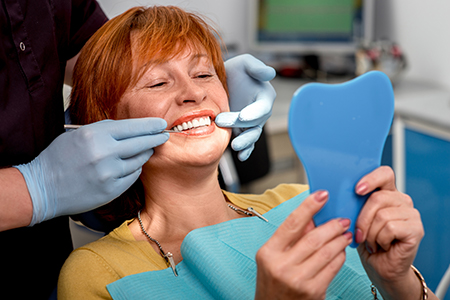
Dentures are removable prosthetic appliances that replace missing teeth and the portion of gum tissue around them. They consist of artificial teeth attached to a supportive base that conforms to the gums. Contemporary dentures use refined acrylics, composite teeth, and carefully contoured bases to create lifelike esthetics and comfortable function.
One of the practical advantages of removable dentures is accessibility for cleaning. Because dentures can be taken out, patients and clinicians can more easily maintain healthy tissues, monitor remaining teeth, and clean both the mouth and the prosthesis thoroughly. This removability also makes adjustments and relines simpler when tissue contours change.
Depending on a patient’s needs, dentures can replace a few missing teeth or an entire arch. Designs range from slim, tooth-supported partials to full upper or lower prostheses. Advances in dental materials and digital fabrication have improved fit, retention, and cosmetic results compared with older denture generations.
Selecting the appropriate denture depends on how many natural teeth remain, the health of those teeth, the condition of the jawbone, and the patient’s expectations for function and appearance. A careful clinical evaluation, including imaging when appropriate, allows the treatment team to recommend the denture type that best balances stability, comfort, and ease of care.
Full (complete) dentures replace an entire upper or lower arch when natural teeth are absent or need removal. Partial dentures restore one or several missing teeth and rely on remaining teeth for support and retention. Both full and partial prostheses can be tailored in shape, tooth form, and shade to match a patient’s facial proportions and smile goals.
For patients seeking greater retention, options include overdentures that attach to remaining tooth roots or to precision attachments, and implant-supported dentures that clip or screw onto dental implants. These hybrid approaches combine the adaptability of a removable prosthesis with the added stability that implants or retained roots can provide.
Complete dentures replace a full upper or lower arch and are designed to restore the look and function of natural teeth. Proper fit depends on accurate impressions, careful jaw relationship records, and close collaboration between the clinician and dental laboratory to select tooth position, shape, and occlusion.
A conventional full denture is fabricated after teeth have been extracted and the tissues have healed. Creating the prosthesis once healing has stabilized helps ensure a precise fit and long-term comfort, though relines may still be needed as the mouth changes with time.
Immediate Denture
An immediate denture is placed at the time of extractions so the patient does not remain without teeth while healing occurs. Because tissues remodel after extractions, immediate prostheses commonly need adjustments and occasional relines to adapt to the changes that follow healing.
Overdenture
An overdenture gains additional support from preserved tooth roots or specially placed attachments. This approach helps preserve bone around the retained roots and can improve stability while still allowing the prosthesis to be removable for hygiene.
Implant-Supported Dentures
Implant-supported dentures anchor to a small number of dental implants placed in the jaw. These attachments reduce movement, enhance chewing efficiency, and can make daily function feel much closer to natural teeth, particularly for lower-arch prostheses where stability can be more challenging.
Removable partial dentures replace one or several missing teeth while preserving healthy neighboring teeth. They restore the dental arch and help prevent unwanted drifting of adjacent teeth, which protects bite relationships and simplifies future treatment planning.
Partial frameworks can be fabricated from a variety of materials—traditional cast metal, flexible resin, or hybrid constructions—each offering different balances of strength, weight, and esthetics. The right choice depends on the clinical situation and the patient’s priorities for visibility, bulk, and ease of care.
Regardless of material, a well-designed partial denture distributes chewing forces evenly, supports proper speech, and fills missing spaces to help maintain facial balance.
Our clinical team takes time to explain options and to design a prosthesis that fits comfortably, functions reliably, and reflects natural tooth form and color.
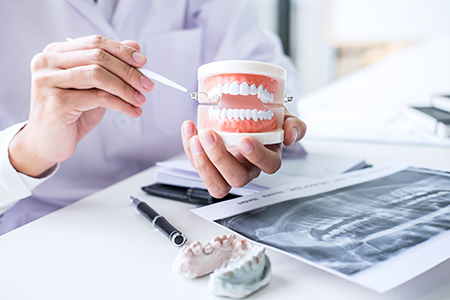
A successful denture outcome depends on thorough planning and precise execution. That begins with a complete review of medical and dental history, an oral health exam, and any necessary imaging. Understanding tissue contours, bite relationships, and individual esthetic goals guides each step from impression-taking to final adjustments.
Treatment may include preparatory care such as periodontal therapy, tooth restorations, or extractions to ensure a healthy foundation. When implants are part of the plan, surgical placement is coordinated with restorative steps so the final prosthesis integrates seamlessly with the supporting structures.
At Morrison Dental Care, we emphasize clear communication throughout the process. Laboratory work is carefully specified and reviewed to match tooth shade, shape, and position. Trial appointments allow for fine-tuning of fit and esthetics before the final delivery, and we schedule follow-up care to monitor comfort and function.

Receiving a new denture marks the start of an adjustment period as muscles, cheeks, and the tongue adapt to the prosthesis. It’s normal to experience mild soreness or pressure points at first; we expect to make small adjustments over several visits to optimize comfort and function.
Adapting to the feel of a denture
New dentures can change speech patterns and chewing mechanics temporarily. Practicing speaking and starting with soft, manageable foods helps build confidence. Gradual progress and periodic adjustments lead to much improved comfort and performance.
Temporary changes in saliva
An increase in saliva production is a common short-term reaction to a new oral appliance. This typically settles as the mouth becomes accustomed to the denture.
Oral hygiene and denture care
Cleaning both the denture and the mouth is essential. Rinse the prosthesis after meals, brush it gently with a denture brush, and soak it overnight as recommended. Continue brushing any remaining natural teeth, gums, and tongue to promote tissue health and reduce the risk of irritation.
Follow-up and routine maintenance
Regular checkups let us evaluate fit, make necessary relines or adjustments, and assess the oral tissues. Over time, tissue changes may require relining or other maintenance to keep the denture stable and comfortable.
Options for added stability
For patients who want enhanced retention, attachments or implant-supported solutions can be considered. These options are discussed during treatment planning so patients can make informed choices about function and usability.
We are committed to thoughtful, patient-centered care and to helping people regain the function and appearance a complete smile provides. If you have questions about whether a denture is right for you, or about any step in the process, please contact our office for more information.

Today, it’s easier than ever to replace missing teeth and achieve natural-looking, durable, and long-lasting results! Depending on a patient’s dental needs, lifestyle, expectations of care, and budget, choices can include conventional fixed bridgework, dental implants, or removable partial and complete dentures. At the office of Morrison Dental Care, we’ll discuss all your options in care and answer all your questions as you choose the solution that’s right for you.
With advances in dental materials and technology, today’s dentures are more comfortable and realistic-looking than ever before.
Whether you wear partial or complete dentures, it’s essential to see the dentist for routine care. Besides checking the fit and condition of your dentures and making any necessary adjustments, you’ll also receive a comprehensive exam to check on the health of any remaining teeth as well as the soft and hard tissues in and around the oral cavity.
A same-day denture offers an accelerated design and fabrication process that allows a patient to go from impression taking to denture insertion in a single day.
For patients who don’t want to wait after having teeth extracted, an immediate denture can be inserted the same day your teeth are removed. Sometime later you may need the denture relined to address any changes in its fit once the extraction sites have completely healed.
While no one wants to drop or break a partial or complete denture, accidents do happen. The good news is that in some cases, your partial or complete denture is reparable. It all depends on the extent of the damage. Don’t hesitate to contact our office if you’ve broken or damaged your denture. We’re happy to help.
The simple act of taking your partial denture in and out can cause certain types of metal clasps to loosen over time. When you come in for your checkup visit or contact our office for an adjustment, we’ll assess the fit of your partial and tighten the clasps for improved stability and comfort.
While rebuilding a complete smile is a worthwhile investment, our office is sensitive to the costs involved in dental care. We customize care and will discuss which treatment options address your needs, lifestyle, and budget. How much a new denture will cost depends on the type of the prosthesis, its design, and the materials used to fabricate the supportive base, teeth, and clasps or precision attachments. Dentures that include the placement of dental implants for added retention and stability typically involve additional costs.
If you have dental insurance, your coverage may include a new or replacement set of dentures. Our staff is happy to review your coverage with you to ensure you are maximizing your insurance benefits while minimizing any out of pocket expenses.
At the office of Morrison Dental Care, we provide an extensive range of dental services, including the latest and most effective methods to help patients with missing teeth rebuild complete and beautiful smiles. As skilled and experienced professionals, we recognize that every patient is different, and every smile is unique. We’re passionate about what we do and take great pride in providing personalized treatment plans while treating our patients as valued partners in care.
Dentures are removable dental appliances designed to replace missing teeth and the surrounding soft tissues. They consist of artificial teeth set in a base that rests on the gums and, when appropriate, engages the contours of the underlying bone for retention. By restoring tooth height and biting surfaces, dentures reestablish chewing ability and help improve speech clarity.
Modern denture materials and fabrication techniques allow for lifelike tooth shapes and natural-looking contours that support facial appearance. Some dentures rely on precise fit and suction for retention while others use clasps, attachments, or implant anchors for added stability. A dentist will recommend the design that best balances comfort, function, and aesthetics for each individual mouth.
Full dentures replace all of the teeth in an arch and are used when a patient is missing every tooth in the upper or lower jaw. Partial dentures are designed to replace one or more missing teeth while preserving and using remaining natural teeth for support. The two types differ in how they attach, the framework materials, and how they distribute bite forces across the mouth.
Partial dentures often use clasps or precision attachments that engage adjacent teeth, which helps stabilize the prosthesis and prevents unwanted tooth movement. Full dentures depend on custom contours, suction, and tissue support or, when combined with implants, on mechanical attachments for improved retention. Choice of prosthesis is based on the number and condition of remaining teeth, bone support, and the patient’s functional and aesthetic goals.
An immediate denture is prepared in advance and placed at the time of tooth removal so the patient is never without teeth during healing. A conventional denture is fabricated after extraction sites have healed to provide a more stable, long-term fit once tissues have settled. An overdenture is a complete prosthesis that gains additional support and retention from remaining roots or from attachments placed on dental implants.
Immediate dentures provide an aesthetic and functional interim solution but typically require relining or adjustment as tissues remodel. Conventional dentures generally offer a closer fit and fewer adjustments after healing is complete. Overdentures combine the benefits of tissue support with the stability of attachments, improving chewing efficiency and prosthesis retention for many patients.
The denture fabrication process begins with a comprehensive dental examination, including assessment of oral tissues, remaining teeth, and jawbone. Impressions are taken to create accurate models, and the dentist will coordinate tooth selection, shade, and position during try-in visits to ensure proper bite and appearance. Laboratory fabrication follows these clinical records, producing a finished prosthesis that will be adjusted at insertion for fit and comfort.
Depending on whether extractions or additional preparatory work are required, the overall timeline can vary from a few visits to several weeks. Patients receiving immediate dentures will have the prosthesis placed at the time of extraction and will return for adjustments as healing progresses. At each follow-up, fit, function, and tissue health are reviewed and minor corrections are made as needed to maximize comfort and performance at the office of Morrison Dental Care.
Yes. Dental implants can be used to support and retain dentures, producing an implant-supported or implant-retained prosthesis. Small titanium posts are placed in the jawbone and, after integration, provide stable attachment points for a denture that snaps or clips into place or is permanently secured by screws. This approach greatly improves stability compared with conventional tissue-supported dentures, especially in the lower jaw where suction is more difficult to achieve.
Implant-supported dentures typically enhance chewing efficiency, reduce movement during speech, and increase patient confidence when eating and speaking. Implants also help preserve jawbone by transmitting functional forces to the bone, which slows resorption and helps maintain facial contours. A dentist will evaluate bone volume, general health, and oral conditions to determine whether implant support is a viable option for a particular patient.
Daily denture care includes rinsing the prosthesis after eating to remove debris, brushing it gently with a soft brush or a denture-specific brush, and soaking it overnight in water or a recommended denture-cleaning solution. Avoid using abrasive toothpaste or hard brushes that can scratch denture surfaces and harbor bacteria. Proper cleaning prevents stains, plaque buildup, and odor while helping preserve the appearance of the denture teeth.
It is also important to maintain the health of any remaining natural teeth and oral tissues by brushing gums, tongue, and remaining teeth daily and visiting the dentist for routine examinations. Remove dentures at night to allow gum tissues to rest and to reduce the risk of irritation or infection. Regular professional checkups let the dentist monitor fit and perform necessary adjustments or professional cleanings.
New denture wearers often experience temporary issues such as sore spots, increased saliva flow, minor speech changes, and difficulty chewing certain foods. These problems are usually related to the mouth adapting to the new appliance and frequently improve within days to a few weeks. Persistent soreness or rubbing should be reported to the dentist so targeted adjustments can be made to relieve pressure points.
Speech difficulties can be addressed by practicing reading aloud and gradually increasing use of the denture during the day. Chewing adaptations such as starting with soft foods and cutting items into smaller pieces help build confidence and coordination. When tissue changes occur over time, relines or adjustments restore fit; severe or ongoing issues may require remaking the prosthesis to ensure comfort and proper function.
Dentures should be evaluated by a dental professional on a regular basis as part of routine oral exams, typically every six to twelve months or as directed by your dentist. Regular visits allow the dentist to inspect tissue health, check the fit and condition of the denture, and address any emerging concerns before they become serious problems. Early detection of fit issues or tissue changes reduces the need for emergency adjustments and helps maintain oral comfort.
Relining may be recommended when the shape of the gums and underlying bone change, which can occur gradually with age or after extractions. A reline reestablishes intimate contact between the denture base and the tissues and can extend the functional life of the prosthesis. For patients in Clifton Park or the surrounding area, Morrison Dental Care can evaluate denture fit and advise on relines, repairs, or replacement when appropriate.
Dentures can restore lost tooth height and support the lips and cheeks, often improving facial contours that may have been affected by tooth loss. Properly designed dentures help maintain a natural facial profile and prevent the sunken appearance that can occur when teeth and supporting bone are missing. Tooth shape, size, and position are chosen to harmonize with facial features and to create a balanced, natural result.
Ill-fitting or improperly designed dentures, however, can negatively affect appearance by altering bite relationships or creating an unnatural tooth display. That is why careful assessment of bite, vertical dimension, and tooth selection is essential during the fabrication process. A clinician adjusts these variables to achieve both comfortable function and an attractive, age-appropriate appearance.
Good candidates for dentures include patients who are missing multiple teeth, have insufficient remaining tooth structure for fixed restorations, or prefer a removable solution to restore smile aesthetics and oral function. The overall health of the mouth, condition of any remaining teeth, jawbone quality, and general medical history are all considered when determining candidacy. Dentures are often recommended when conservative or fixed options are not suitable or when a removable option better fits the patient’s needs.
Alternatives to dentures include dental bridges and implant-based restorations, which can provide fixed tooth replacement for appropriate candidates. Implant-retained prostheses combine the advantages of implants with the versatility of removable or fixed dentures for many patients. A comprehensive evaluation with your dentist will determine the most appropriate treatment pathway based on oral health, functional goals, and long-term prognosis.
Address:
1524 Route 9, Clifton Park, NY 12065